
Building Strong Foundations for Your Future
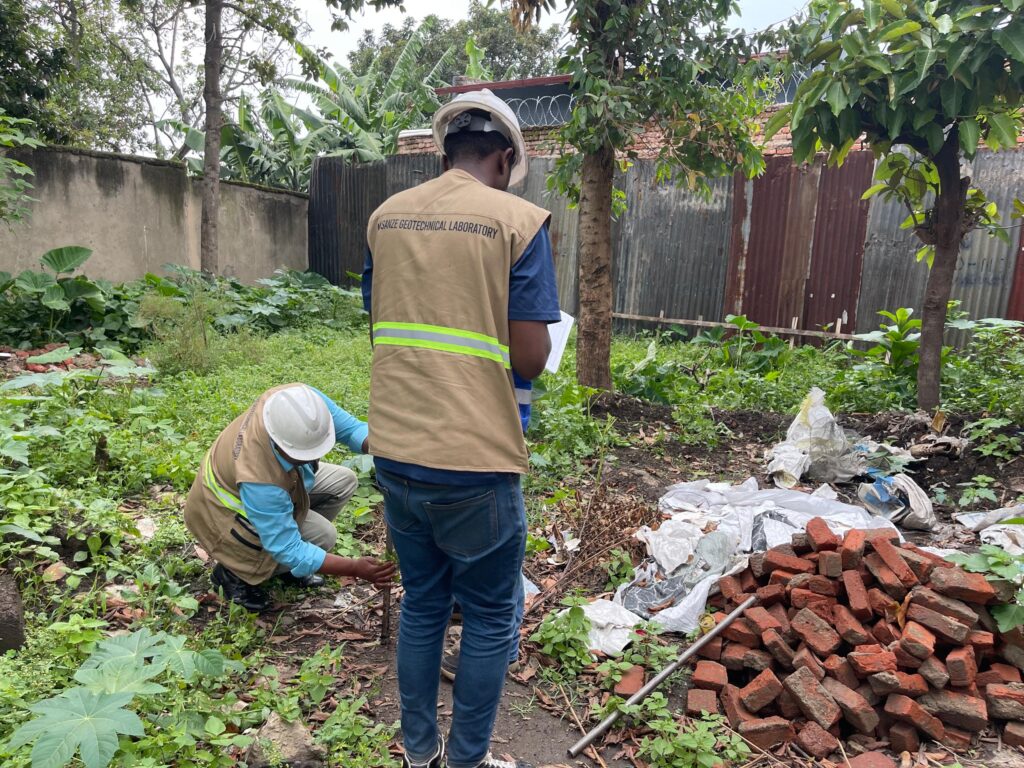
Geotechnical Site investigation
Engineers are conducting a geotechnical site investigation. Collecting soil samples and assessing ground conditions to determine the soil’s strength, composition, and suitability for construction. This process helps ensure that the foundation design will be safe, stable, and appropriate for the planned structure.
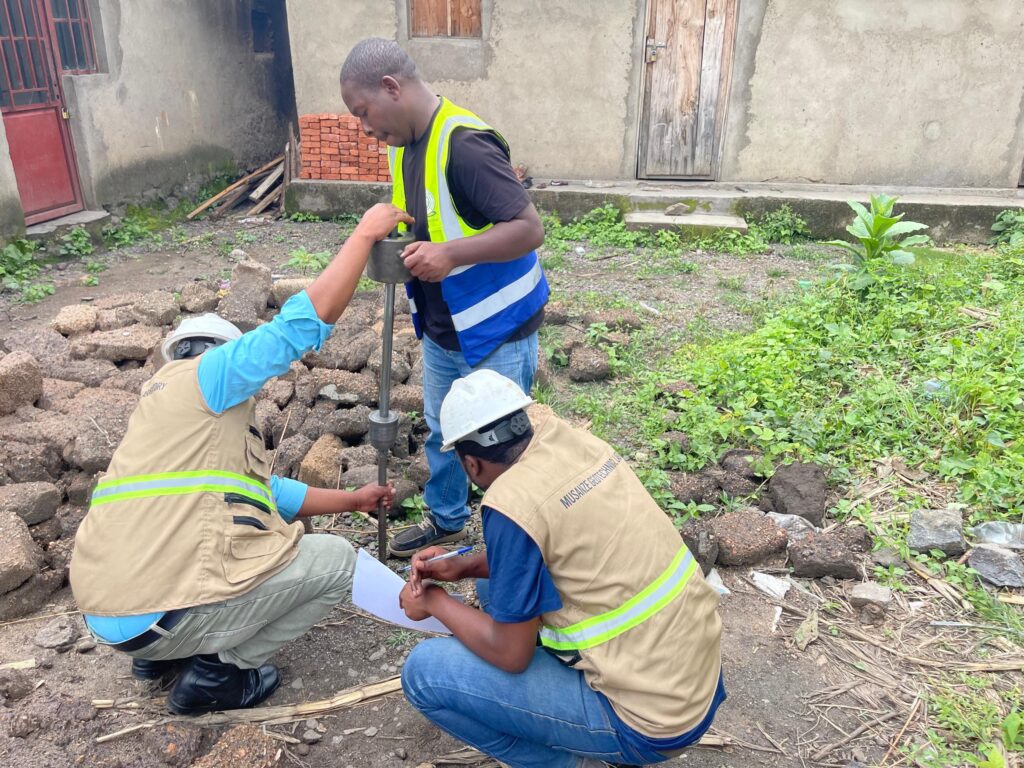
We work as Team
Engineers are carrying out an in-situ soil test, likely a field penetration or sampling test as part of a geotechnical investigation. One engineer is operating the testing equipment, another is stabilizing it, while the third records measurements.
This process helps determine the soil’s strength and bearing capacity to ensure the foundation design is safe and suitable for construction.
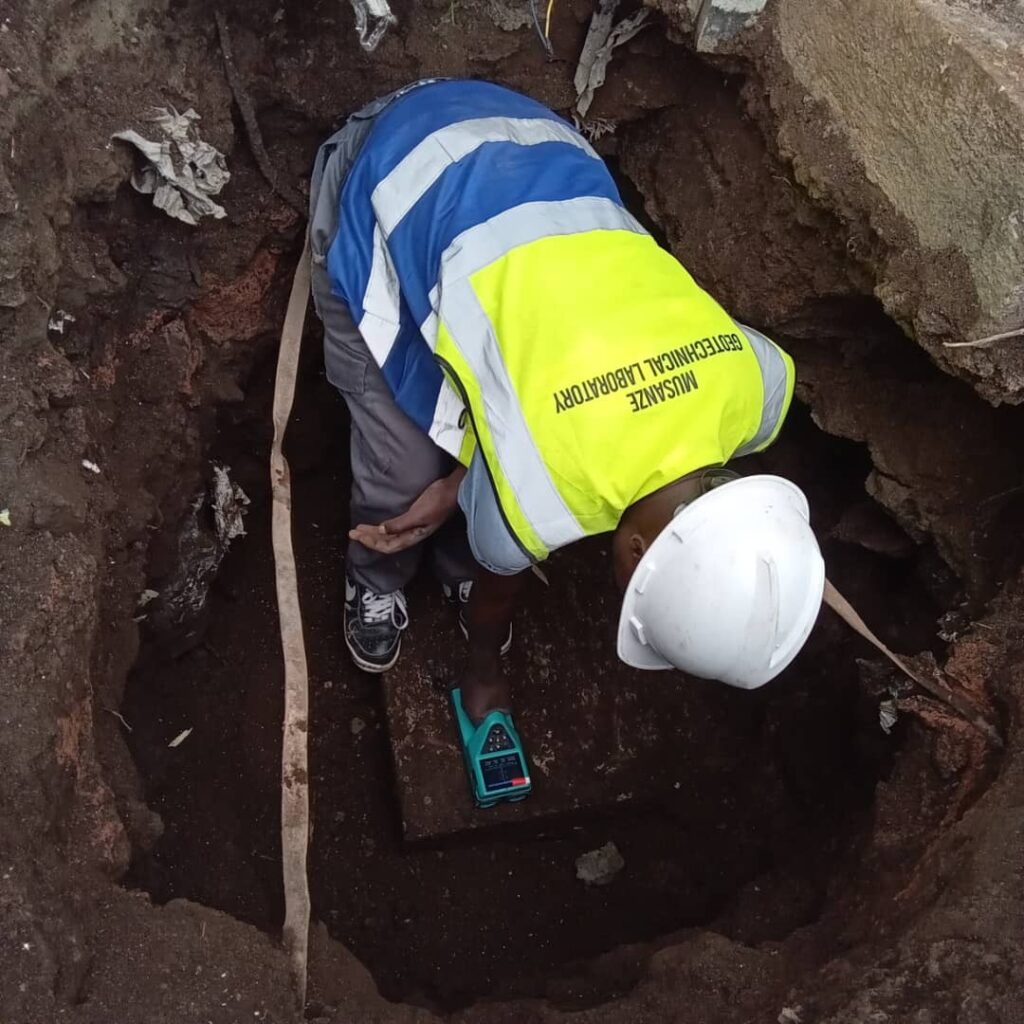
Field density test
Geotechnical engineer is conducting a field density test inside a foundation pit. Using specialized testing equipment, he is measuring soil compaction and strength to verify that the ground meets the required engineering standards before construction proceeds.
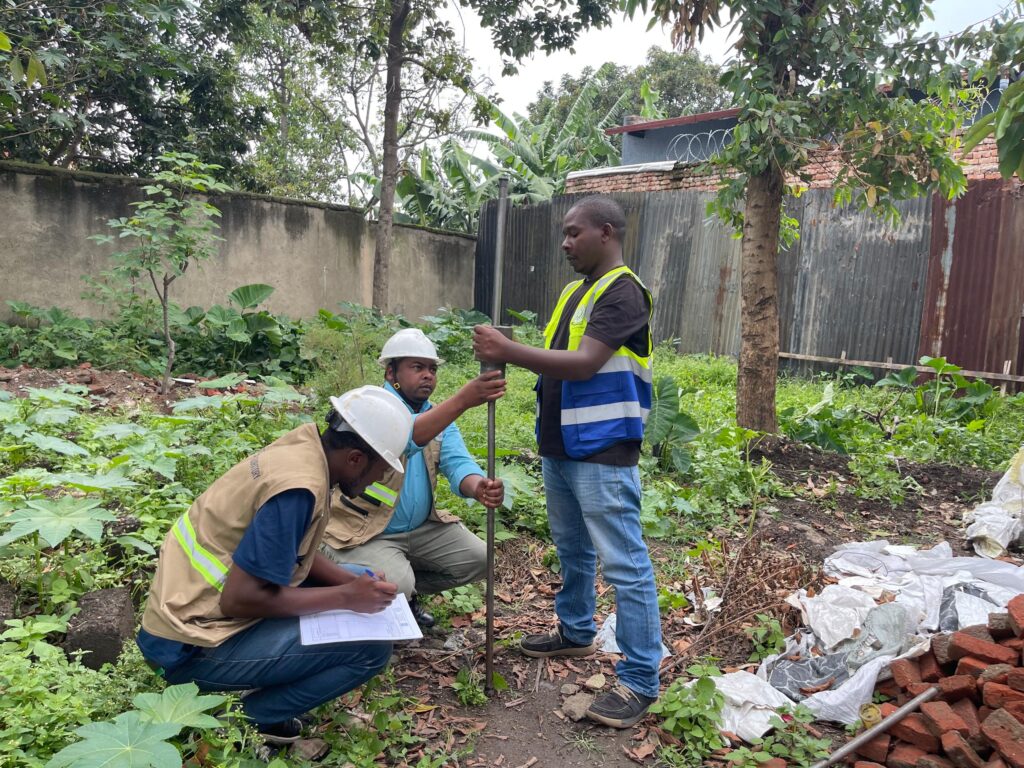
Field soil penetration test
Geotechnical team is performing a field soil penetration test as part of a site investigation. One engineer operates the testing rod, another stabilizes the equipment, while the third records the measurements.
This hands-on testing helps determine soil strength and bearing capacity, ensuring that the proposed structure will be built on safe, stable ground. It’s a critical step in preventing foundation failure and guaranteeing long-term structural integrity.
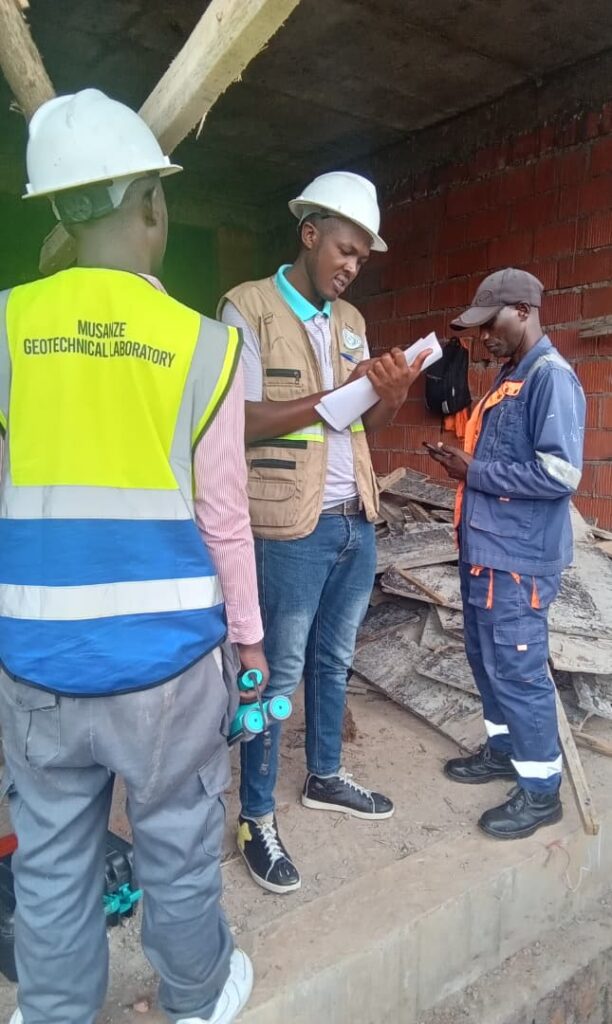
Technical review
Geotechnical engineers are conducting an on-site technical review and coordination meeting. One engineer is documenting observations while discussing findings with the site team, ensuring that soil test results and ground conditions are properly communicated before construction progresses.
Our Services
Building with Accuracy and Excellence
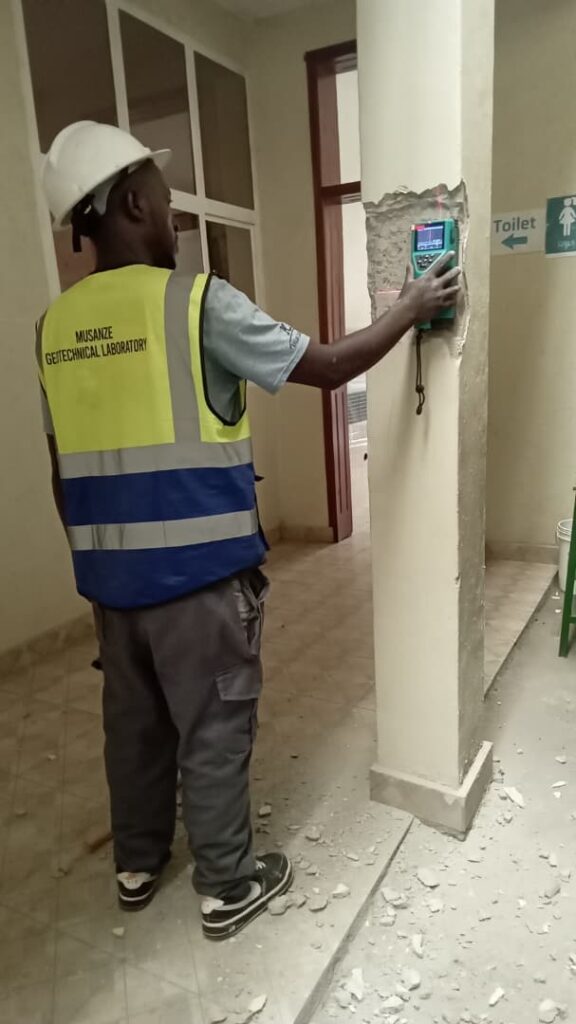
The engineer is carrying out a structural inspection on the column using a Schmidt Hammer (Concrete Rebound Hammer) to check concrete strength without damaging the surface. This helps confirm the structure’s stability and detect any weak areas early. The assessment supports quality control, safety, and the long-term performance of the building.
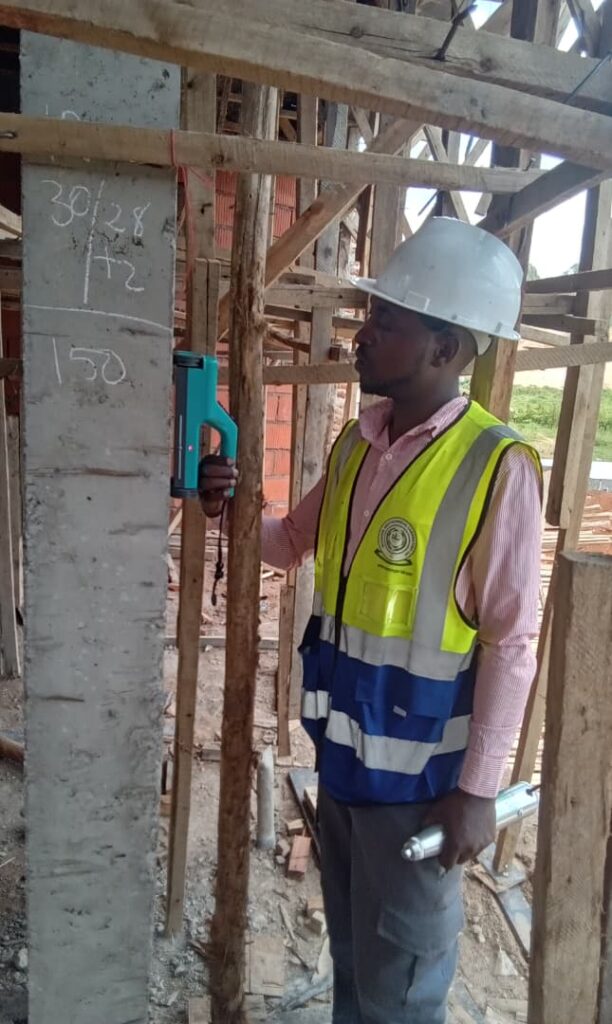
The engineer is inspecting the concrete column to check its strength and quality at the construction site. He is using a rebound hammer (Schmidt hammer), a handheld testing device that measures the hardness and estimated compressive strength of concrete without damaging the structure. The device works by striking the concrete surface with a spring-loaded mass and measuring the rebound value, which helps determine whether the concrete meets the required structural standards.
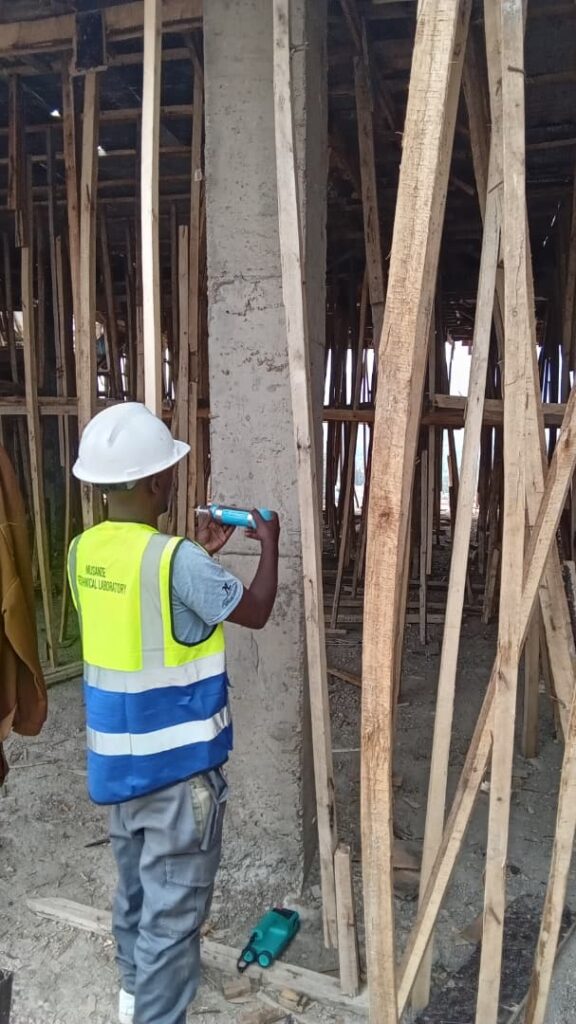
Rebound Hammer Test
The engineer is conducting a quality inspection on a concrete column at a construction site. He is checking the surface hardness and estimating the compressive strength of the concrete to ensure it meets structural standards.
The device being used is a Schmidt Rebound Hammer, a non-destructive testing tool. It works by striking the concrete surface with a spring-loaded mass and measuring the rebound distance. The rebound value indicates the hardness and approximate strength of the concrete, helping engineers assess the quality and durability of the structure without causing any damage.
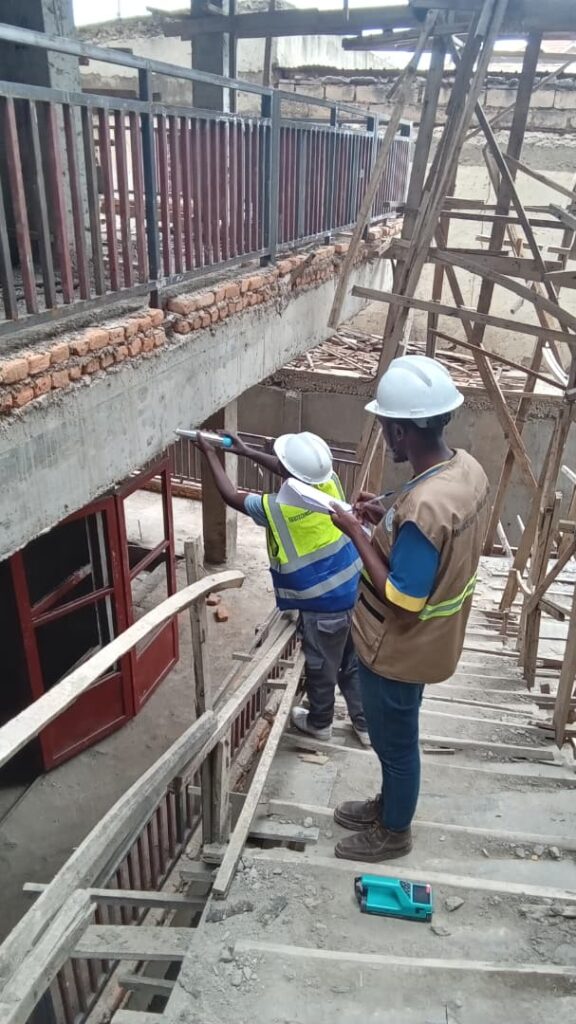
The engineer is conducting a Rebound Hammer Test on a concrete beam to check its strength and quality.
He is using a Schmidt Rebound Hammer, a non-destructive testing device.
The tool measures surface hardness to estimate the compressive strength of the concrete.
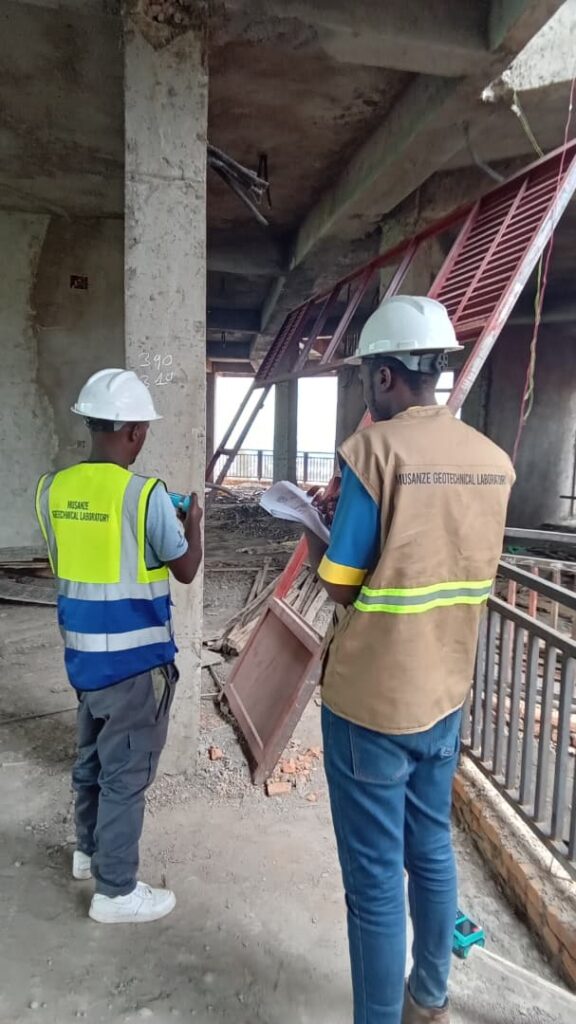
The engineers working in pair, performing a Rebound Hammer Test on a concrete column to assess its strength and quality.
He is using a Schmidt Rebound Hammer, a non-destructive testing device.
The test measures surface hardness to estimate the compressive strength of the concrete.